Why weight cycling keeps happening
Crash dieting can produce early weight loss, but it can also trigger adaptive changes in metabolism and appetite regulation that increase the risk of regain.
Metabolic slowdown after rapid loss
When calorie intake falls sharply, your body compensates by reducing energy expenditure. This metabolic slowdown means you burn fewer calories at rest, which increases the chance of weight regain once normal eating resumes.
The hormonal gap: hunger rises while fullness falls
During aggressive dieting, ghrelin levels often rise and satiety signalling can weaken. In practical terms, this can mean stronger hunger, persistent food thoughts, and lower fullness after meals.
GLP-1 based treatment can help bridge this hormonal gap. Under clinical supervision, these therapies can reduce appetite intensity, improve satiety, and mute food noise so patients can sustain a structured plan without feeling in constant biological conflict.
At PrivateDoc, this approach sits within a full clinical weight management service, with treatment pathways that may include options such as Wegovy or Mounjaro when clinically appropriate.
Muscle loss versus fat loss
Unmonitored fad dieting can reduce lean muscle as well as fat. Loss of muscle mass can further lower metabolic rate and make maintenance harder over time.
Clinical programmes are designed to protect lean tissue while targeting fat loss through:
- Steady, controlled weight reduction instead of extreme calorie restriction.
- Protein-aware nutrition planning and practical behaviour support.
- Regular medical review to adjust treatment based on response and tolerability.
Related public health benefits are also outlined in NHS Better Health guidance, shown in the infographic below.
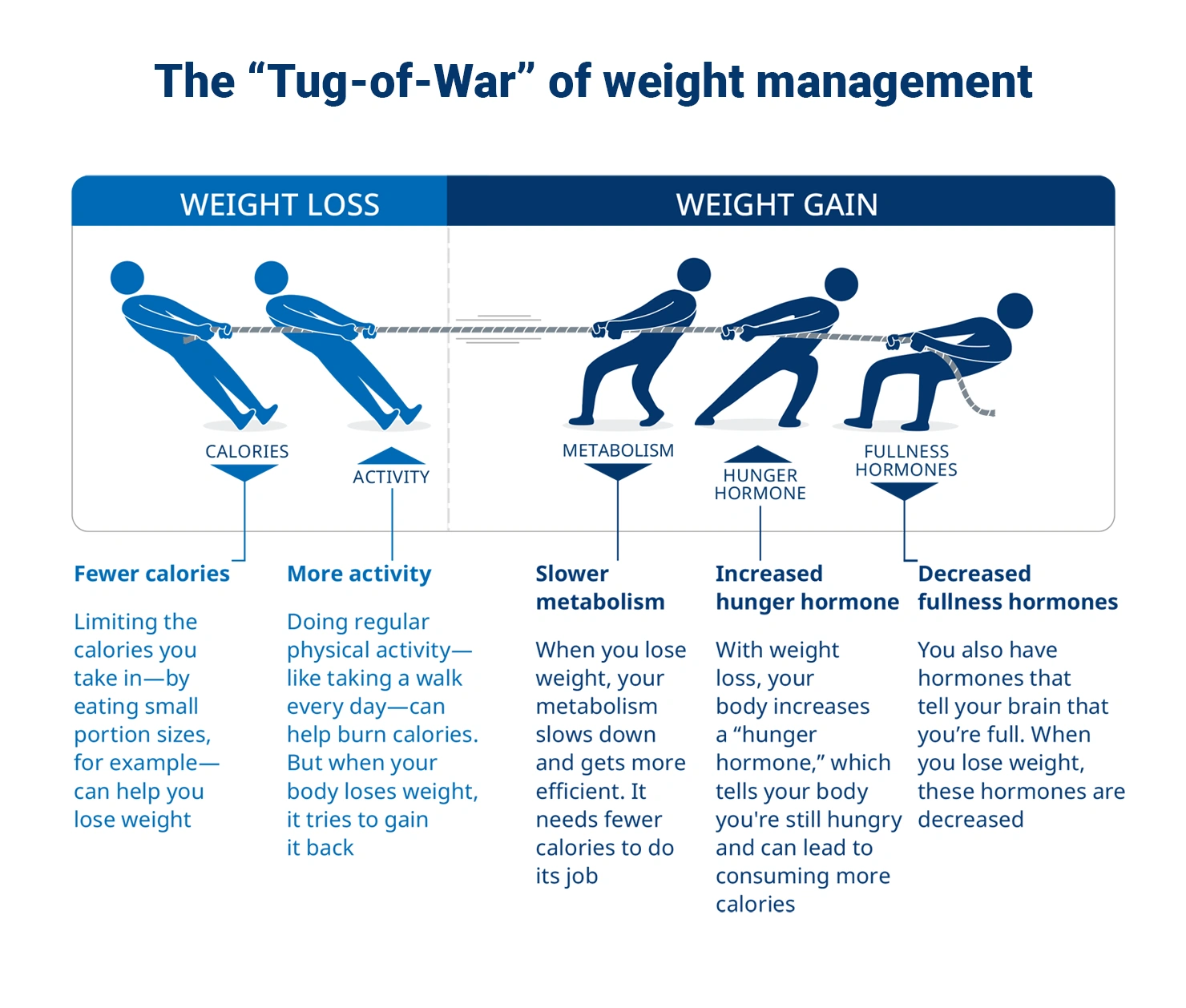
Image courtesy of Novo Nordisk
The health risks of yo-yo dieting
Weight cycling is associated with repeated physiological stress and poorer long-term outcomes compared with stable weight management.
- Higher blood pressure and greater cardiometabolic strain over repeated cycles.
- Increased risk of insulin resistance and type 2 diabetes progression.
- Greater difficulty maintaining future weight loss as metabolic adaptation deepens.
A 2007 study of 2,500 adults found better long-term health markers in participants who maintained stable weight compared with those who gained weight over follow-up. This remained relevant even in people with obesity.
Initial weight loss can improve blood pressure, glucose control, and kidney function. But with rapid regain, those markers can rise again into unhealthy ranges, and repeated overshoot may contribute to longer-term cardiovascular and renal harm.
How to break the cycle safely
The goal is not another short-term diet. The goal is metabolic stability, clinically guided fat loss, and durable lifestyle change.
For many patients, this requires a bridge period where biology is stabilised first, so behaviour change becomes realistic. That is where structured medical care and GLP-1 treatment can help.
- Steady, supervised weight reduction rather than extreme restriction.
- Appetite and satiety support to reduce rebound eating pressure.
- Monitoring that protects progress and reduces repeated weight fluctuation.
Clinical summary: The PrivateDoc approach
At PrivateDoc, we treat weight cycling as a medical pattern, not a motivation failure. Our programmes combine clinician oversight, lifestyle coaching, and evidence-based prescribing to support sustainable outcomes.
- Hormonal support: GLP-1 based therapy can reduce food noise and help patients stay consistent.
- Metabolic protection: Gradual pacing is used to avoid the extremes linked to metabolic slowdown.
- Body composition focus: Plans aim to prioritise fat loss while protecting lean muscle mass.
- Long-term bridge: Clinical support creates the quieter physiological window needed to build durable habits.
If you are experiencing repeated regain, a clinician-led review can help you move from short-term cycles to a safer long-term strategy.
Book a clinical consultation to discuss whether a medically supervised weight management plan is suitable for you.