What is an obese BMI?
BMI stands for Body Mass Index and is a commonly used measure for calculating whether you are the correct weight for your height. BMI is generally universally accepted to be a good starting point for measuring weight, however, it does not take into account muscle mass and other weight factors such as age or gender.
BMI result is often used alongside other measures of health such as taking body measurements, ie. waist circumference to give a more detailed picture of health and also identify other risk factors associated with being under or overweight.
Where can I calculate my BMI?
You can follow this easy to use BMI calculator on our website. All you need to know is your weight and height. If you do have an obese BMI there are links on this page to further resources that can help you.
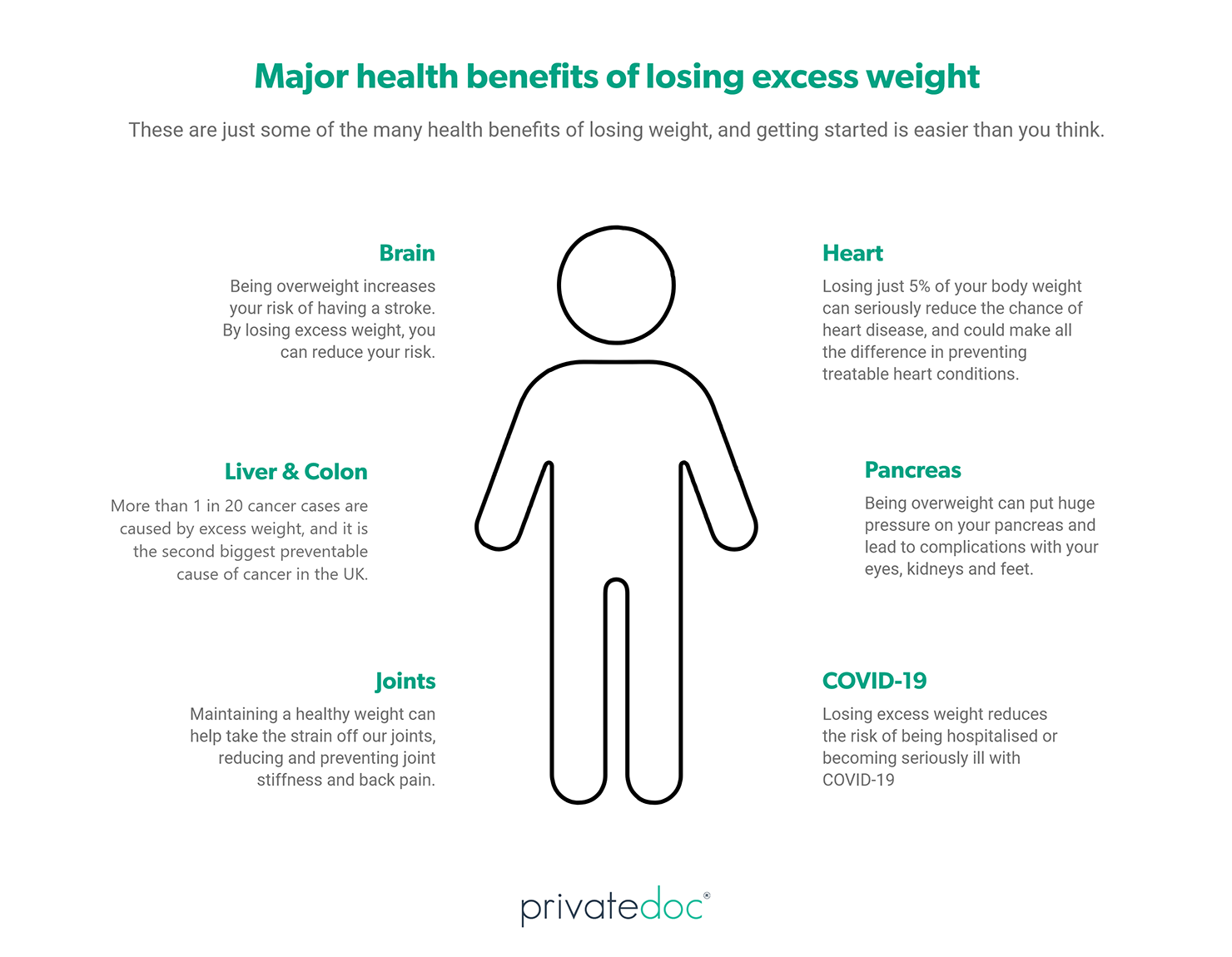
6 benefits of weight loss when you have an obese BMI
- Decreased risk of common cancers such as; colon, liver, pancreas and kidney.
- Lowered risk of increased blood pressure.
- Reduced risk of heart disease.
- Less pain and strain from chronic back and joint conditions.
- Less risk of developing diabetes.
- Decreased risk of being hospitalised or becoming seriously ill with Covid-19.
These benefits are listed as part of Better Heath’s weight loss awareness campaign, explored in the infographic below:
*NIHR, Being overweight or obese is linked with heart disease even without other metabolic risk factors
At PrivateDoc we understand that losing weight isn’t always as simple or as easy as eating less and moving more.
Often our patients will come to us after years of trying to lose weight with no success. We take a holistic approach to our prescription treatments which enables you to make lasting lifestyle changes to better your health.
To find out more about our prescription weight loss treatments click the link below