Key takeaways: why weight returns after medication
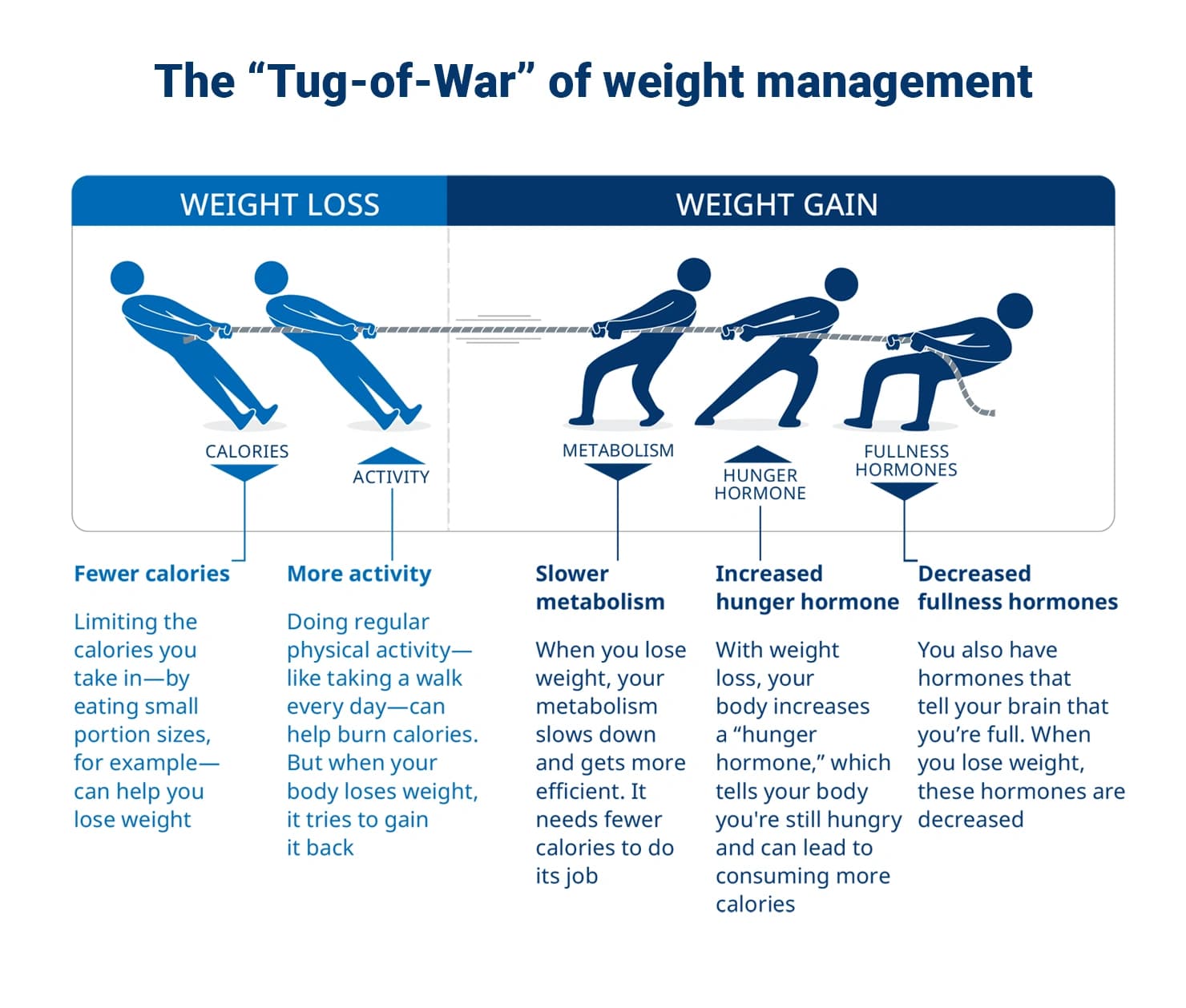
- Regain is biological, not a character flaw: Appetite hormones and a slower metabolism push weight back up when GLP-1 support stops.
- Trials show a pattern: Without a maintenance plan, a large share of lost weight often returns within 12 months.
- Cold turkey is the riskiest exit: A reverse titration gives hunger signals time to settle.
- Protein and strength training protect muscle: Muscle loss lowers resting calorie burn and speeds fat regain.
- Some people stay on a low dose: Like blood-pressure treatment, longer-term therapy can be appropriate when risk remains high.
The biology of post-treatment weight regain
GLP-1 medicines such as semaglutide and tirzepatide slow emptying and quiet hypothalamic hunger signals. When they leave your system, several defences of previous body weight switch back on.
1. Food noise and appetite hormones
Receptor stimulation stops, the stomach empties faster, and ghrelin rises. Leptin often stays low because fat mass is reduced. The brain reads that as undernourishment and turns hunger back up.
2. Adaptive thermogenesis
A smaller body burns fewer calories. Metabolic adaptation can slow resting burn further still, so ordinary portions become a surplus.
3. Loss of lean muscle
Rapid loss without enough protein and resistance work reduces metabolically active muscle. When eating normalises, fat returns faster.
Why medication alone cannot cure obesity
Pharmacotherapy can reset metabolism. It does not automatically rewrite stress eating, sleep debt, or an environment full of ultra-processed food.
- Stress and cortisol drive cravings even without physical hunger.
- Environment — large portions, desk work, easy snacks — challenges control once suppression fades.
- Poor sleep worsens insulin sensitivity and appetite signalling.
Clinical strategies to prevent regain
1. Step-down tapering instead of stopping overnight
Coming off a high GLP-1 dose suddenly creates a hunger spike. Clinicians often reverse-titrate over months, and sometimes space doses, so habits can be tested while some pharmacological support remains. PrivateDoc titrate-down packages are designed for this.
2. Protein and progressive resistance training
- Protein: Around 1.2 to 1.6 g per kilogram of target body weight daily supports muscle and satiety.
- Strength work: Two to three sessions a week help keep resting calorie burn up.
3. Personal weight thresholds
A 2 kg to 3 kg buffer above goal weight is an early warning. If you hit it, contact your clinician before a larger rebound. You may restart treatment at a lower dose if needed.
4. Longer-term low-dose maintenance
Because obesity relapses, some people stay on a lower dose under review, in the same way other chronic conditions are treated long term.
Abrupt stop vs clinician-led taper
| Strategy |
Abrupt cessation |
Clinician-led taper and maintenance |
| Appetite |
Sharp surge in hunger and food noise within 2 to 4 weeks |
Gradual return of hunger, with time to adapt |
| Lean mass |
High risk of fat regain over lost muscle |
Protein and resistance training are built into the plan |
| How it feels |
Easy to feel overwhelmed |
Measured steps with ongoing advice |
| 12-month pattern |
~60% to 70% of lost weight often returns |
Higher chance of keeping a stable, healthy weight |
Sustaining results with PrivateDoc
PrivateDoc treats maintenance as part of care, not an afterthought: tapering plans, check-ins on blood pressure and lifestyle, and a route to restart if weight creeps up. Read more on reassurance around regain and our maintenance packages.
Disclaimer: This article is for general information only and does not replace personalised medical advice. Treatment is only authorised after a successful clinical assessment.