Don't be too restrictive
When starting a weight loss journey, many people think the fewer calories they consume the better, however, this is not going to get you lasting sustainable results and your weight is likely to yoyo. When reducing calories it’s always good to use a calculator to work out your BMR (Base Metabolic Rate) and TDEE (Total Daily Energy Expenditure). Your BMR is how many calories your body burns at rest, just through bodily functions and keeping you alive. Your TDEE includes activity levels, weight, height and age to give an approximate calculation of calories burnt in total. Usually, when calculating calories you look to drop calories from your TDEE, making sure that they stay above your BMR.
Using averages we’ve developed a weight loss diet plan which contains calorie-controlled and nutrient-dense meals which you can purchase here following this link: PrivateDoc Diet Guide.
Understand good quality food sources & macronutrients
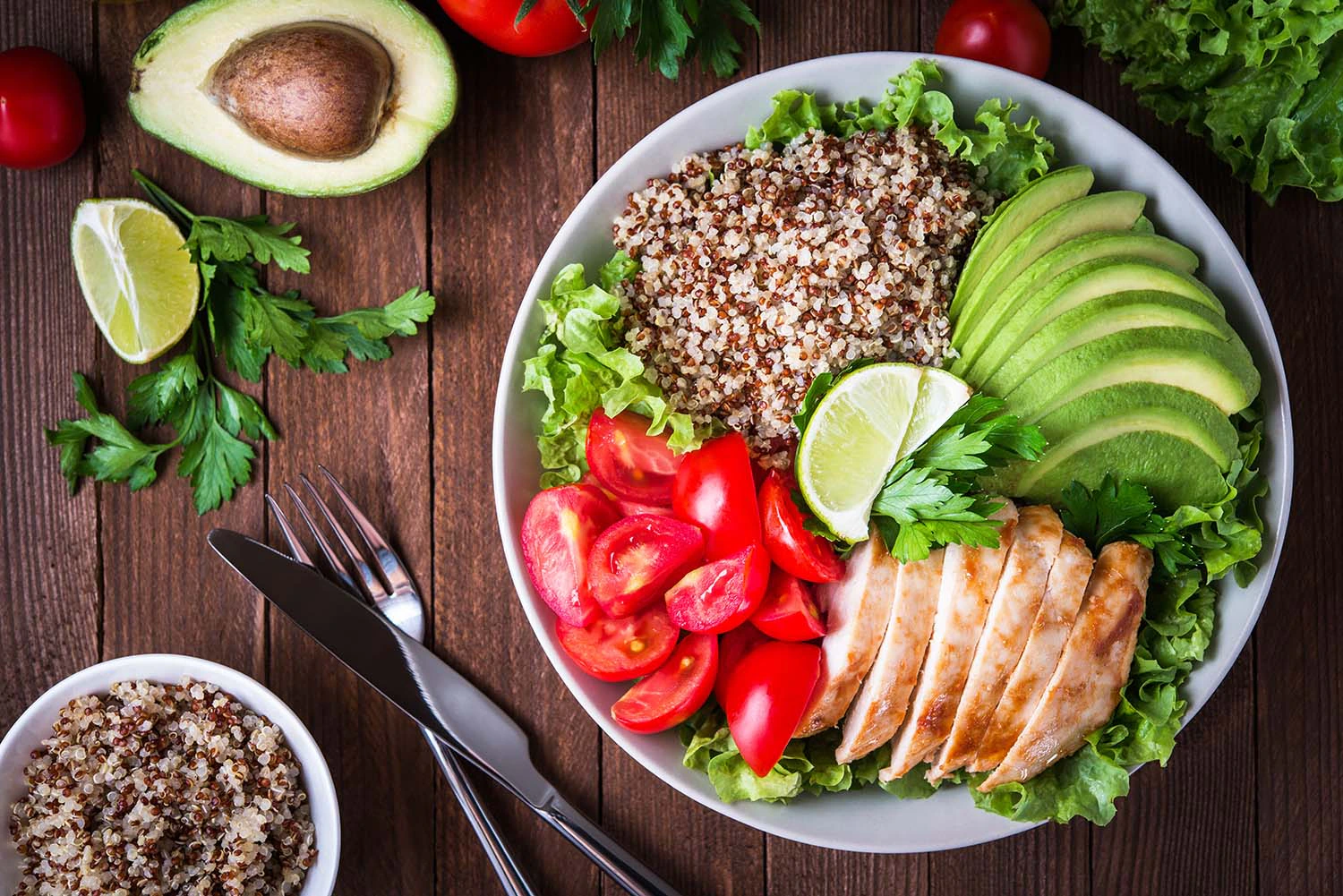
All foods are made up of macro-nutrients, commonly referred to as macros. Our 3 main sources are carbs, protein and fats. When dieting it's important to find a healthy balance of all 3 and also the quality of those food sources; for example opting for unprocessed carbohydrates such as potatoes over processed carbohydrates such as pizza.
Don't skip meals or drop calories dramatically
It might feel like a good idea to save calories here and there by skipping meals or even dramatically reducing calories to fast track results; however, these quick-fix diets are most likely to rebound as they are unsustainable in the long run. Skipping meals can also cause you to binge later as hunger hormones rise.
Keep consistent
Another way to diet effectively sounds obvious - but is often overlooked - consistency. If you're restricting calories, eating healthier and exercising more consistently alongside your weight loss treatment, you will see results. Whilst there will always be odd days where you eat slightly more, or even slightly less, typically if you follow the 80:20 rule, you'll achieve lasting results. Acknowledging that 20% of the time you may slip up, also allows your diet to be more sustainable as a lifestyle choice, so you can still celebrate special occasions etc and then jump back on track.
Get your nutrients through diet or supplementation
When restricting calories it can be more difficult to get a healthy range of vitamins and minerals into your diet. Supplements help bridge the gap when we are unable to get the nutrients we need from our diet alone, they can help maintain and even have potential to improve our health. To find out more visit our weight loss supplement support.
Track your calories
To lose weight you need to be in a calorie deficit, which means you need to burn more calories than you consume. A good diet plan should keep your calories in check to ensure you're on track for weight loss, without dramatically dropping calories lower than necessary. We recommend following our diet plan for guidance which you can purchase here.
Or if you would like to go it alone, we recommend using a calorie tracking app such as Myfitnesspal which will enable you to ensure you're consuming the right amount of calories, but also macro and micro nutrients such as carbs, protein, fats & minerals.