



Wegovy pill vs Wegovy injection: what patients need to know when comparing a daily tablet (oral semaglutide) with weekly Wegovy® injections.
Wegovy Pill vs Wegovy Injection: Which Works Better for Weight Loss?
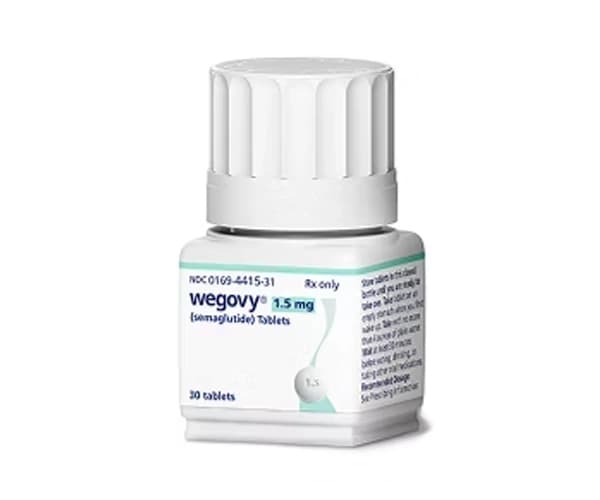
Oral semaglutide for weight loss: a quick answer
If you are asking whether oral semaglutide, often described as a Wegovy® pill, works as well as semaglutide injections such as Wegovy, the short answer is: for many patients, yes.
Clinical trial data shows that oral semaglutide can deliver meaningful weight loss, although injections still produce slightly higher average results in some studies.
This matters because many patients want an effective alternative to weekly injections, but also want realistic guidance on how much weight they might lose, how the tablet works, and whether it is the right fit for their routine.
In this article, I explain what the research shows, how oral semaglutide compares with injections, and why adherence, tolerability, and daily practicality often matter just as much as the average trial result.
The key question is not simply whether the pill is effective, but which option a patient can realistically sustain over time.
What is oral semaglutide?
The introduction of oral semaglutide represents an important development in obesity treatment. For the first time, we have a tablet that works in the same biological way as injectable GLP-1 medications:
- Reduce appetite
- Slow digestion
- Support weight loss over time
Importantly, this is not a new drug, but a new way of delivering it. For UK availability and product detail, see our Wegovy Pill treatment hub.
What does the research actually show?
The most relevant data comes from a large phase 3 clinical trial (OASIS 4), published in the New England Journal of Medicine (2025).
In this study of adults living with overweight or obesity:
- Average weight loss was around 13–14%
- Compared to around 2% with placebo
- With consistent adherence, weight loss increased to approximately 16.6%
In addition:
- Around 76% of participants achieved at least 5% weight loss
- Around 56% achieved at least 10% weight loss
- Notably, around 1 in 3 patients achieved 20% or more weight loss
These are significant results, but they need to be interpreted carefully.
So, is the pill as effective as injections?
Overall, the weight loss achieved is broadly comparable to injectable semaglutide, although injections still show slightly higher average results in some studies.
The short answer is yes for many patients, but not always in exactly the same way, because there are many nuances to every weight loss journey.
What is important to understand is that the tablet is not a weaker version of treatment; it contains the same active medication, delivered in a different way. Reassuringly, we already have longer-term safety data to help guide practice beyond the initial trial reports.
However, the experience and outcomes are not identical.

|
|
|
|
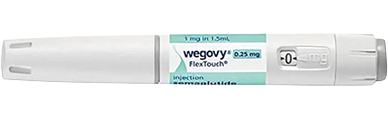
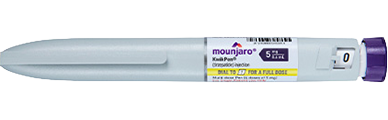
| Treatment | Oral semaglutide (tablet) | Semaglutide (Wegovy injection) | Tirzepatide (Mounjaro injection) |
|---|---|---|---|
| Form | Daily tablet | Weekly injection | Weekly injection |
| Typical average weight loss | ~13–14% (up to ~16.6% with strong adherence) | ~15% | ~20% |
| Dosing | Daily | Weekly | Weekly |
Figures from separate clinical trials; not a direct head-to-head comparison. Individual results vary.
How much weight can you lose with oral semaglutide?
One important point that is often overlooked is that these figures are averages. In reality:
- Some patients lose significantly more weight
- Others lose less
- A meaningful proportion achieve very high levels of weight loss
This variation has always existed in obesity treatment. It is also important to look at the probability of losing weight.
In clinical trials of oral semaglutide, around one third of patients achieved 20% or more weight loss. This is a powerful finding, but it represents a subset of patients rather than the expected outcome for everyone.
How often do patients achieve 20% or more weight loss?
Important: these figures come from separate clinical trials and should be interpreted as indicative rather than direct comparisons. Individual results vary significantly, and outcomes depend on factors such as adherence, tolerability, and dose.
|
|
|
|
|
| Feature | Oral semaglutide (tablet) | Semaglutide (Wegovy injection) | Tirzepatide (Mounjaro injection) |
|---|---|---|---|
| ≥20% weight loss (clinical trials) | ~30% of patients | ~25–26% of patients | ~32–63% depending on dose |
| Key context | Observed in OASIS 4 trial with structured support | Similar response pattern across STEP and comparative trials | Higher responses seen at higher doses |
Figures from separate clinical trials; not a direct head-to-head comparison. Individual results vary.
It is also worth noting that some patients lose significantly more weight than others; these patients are sometimes described as early responders.
Why results vary from person to person
Recent data from higher-dose semaglutide (7.2 mg) provides further insight into how some patients respond to treatment. In the STEP UP trial, researchers identified a group of “early responders” — patients who had already lost around 15% of their body weight within the first 6 months.
This group, representing around one in four patients, went on to achieve:
- Close to 28% weight loss on average at 72 weeks
This suggests that response to treatment may become apparent early, and that patients who respond strongly in the first few months may go on to achieve significantly greater overall results. We explored this concept in more detail in our related article on early response to treatment.
However, it is important to note that:
- This reflects a specific subgroup, not all patients
- We cannot reliably predict in advance who will fall into this group
As with all obesity treatments, results vary — but early progress can sometimes be a useful signal of longer-term outcomes.
However, both trial data and clinical practice suggest that stronger responses are often associated with:
- Consistent adherence to treatment
- Ability to tolerate and remain on higher doses
- Alignment with supportive lifestyle changes
It is also likely that individual biology plays a role, although this is not yet fully understood. The key point is that while substantial weight loss is achievable for some patients, it should always be discussed alongside realistic expectations and the understanding that outcomes vary.
As with all obesity treatments, the goal is not to predict the maximum possible result, but to support a sustainable and meaningful improvement in health.
What influences results in practice?
From both clinical trial data and real-world experience, outcomes are influenced by several key factors:
- Good support — both clinical and personal support can make a significant difference
- Adherence — how consistently the medication is taken
- Tolerability — whether side effects can be managed
- Lifestyle support — diet, activity, and daily habits
One of the most important insights from the trial is the difference between:
- ~13–14% weight loss (average, real-world)
- ~16.6% weight loss (with strong adherence)
This highlights a critical point: the effectiveness of treatment is closely linked to how consistently it can be maintained.
Oral semaglutide vs injections: practical differences
Although the medication is the same, the tablet behaves differently in practice. It must be taken:
- On an empty stomach
- With a delay before eating or drinking
- As part of a gradual dose increase
Absorption can also vary more compared to injections. For a detailed routine comparison, see Wegovy injection vs Wegovy pill.
Side effects are generally similar to injectable treatments and are mainly gastrointestinal, including:
- Nausea
- Vomiting
- Diarrhoea
These are usually mild to moderate and often improve over time, although some patients may find them difficult.
Who may prefer a weight loss pill?
There are situations where the tablet may be the better option:
- Patients who are uncomfortable with injections
- Those who prefer a daily routine
- Individuals who may not have started treatment otherwise
For these patients, a tablet can improve adherence — and adherence often translates into better real-world outcomes.
How to choose between oral semaglutide and injections
Perhaps the most important change is not the tablet itself, but what it represents. We are no longer limited to a single approach.
Instead of asking “Do you want treatment?” we can now ask: “Which option fits best with your life, preferences, and goals?”
It is entirely reasonable for patients to have a preference when both options are clinically appropriate. This type of shared decision making is important, as it supports long-term engagement with treatment.
Final thoughts
If you are considering treatment, it is important not to focus solely on whether the pill is “better” than injections. Instead, the decision should be based on:
- Your medical history
- Your comfort with the treatment
- Your ability to stay consistent over time
- What matters most to you in the long term
In many cases, both options can be effective.
Check your eligibility for the Wegovy Pill
Ready to explore oral semaglutide? Check your eligibility for Wegovy Pill through PrivateDoc: complete a free online consultation and our UK clinicians will assess whether the pill is appropriate for you.
References
- Wharton S, Lingvay I, Bogdanski P, et al. Oral semaglutide 25 mg in adults with overweight or obesity. New England Journal of Medicine. 2025;393:1077–1087.
- Wilding JPH, Batterham RL, Calanna S, et al. Once-weekly semaglutide in adults with overweight or obesity. New England Journal of Medicine. 2021;384:989–1002.
- Jastreboff AM, Aronne LJ, Ahmad NN, et al. Tirzepatide once weekly for the treatment of obesity. New England Journal of Medicine. 2022;387:205–216.
- Aronne LJ, Horn DB, le Roux CW, et al. Tirzepatide as compared with semaglutide for the treatment of obesity. New England Journal of Medicine. 2025;393:26–36.
- Wharton S, Freitas P, Hjelmesæth J, et al. Once-weekly semaglutide 7.2 mg in adults with obesity (STEP UP): a randomised, controlled, phase 3b trial. Lancet Diabetes & Endocrinology. 2025.
- Novo Nordisk A/S. Higher dose Wegovy® demonstrates nearly 28% weight loss in early responders: sub-analysis of the STEP UP trial presented at the European Congress on Obesity (ECO). 2026.
Disclaimer
This article is for general information only and does not replace personalised medical advice. Trial figures are averages from separate studies and should not be treated as guarantees of individual outcomes. Treatment is only appropriate after a clinical assessment; always follow the advice of your prescriber.