Key takeaways: oral weight loss maintenance in 2026
- Daily GLP-1 tablets are now part of UK care: Foundayo and the Wegovy pill sit alongside weekly injections for medically supervised weight management.
- Routines differ: Foundayo can be taken at any time, with or without food. The Wegovy pill needs a morning fasting window and a small sip of water.
- Trial averages vary: Oral semaglutide showed higher average loss in OASIS than orforglipron in ATTAIN. Mysimba and Orlistat typically produce more modest reductions.
- Stopping without a plan risks regain: Appetite hormones return when treatment ends. Tapering, protein, and resistance training help protect results.
- Choose a regulated clinic: Look for CQC registration, GPhC dispensing, and a dedicated maintenance pathway rather than an automated tablet shop.
The 2026 spectrum of oral weight loss treatments in the UK
UK prescribers can now choose between three oral classes. The right option depends on medical history, daily routine, and whether you are still losing weight or moving into maintenance.
1. Oral GLP-1 receptor agonists
Peptide GLP-1 hormones are normally broken down in the gut. Two licensed approaches now get a clinically useful dose into the bloodstream as a daily tablet.
Wegovy pill (oral semaglutide)
The Wegovy pill uses an absorption enhancer (SNAC) so semaglutide can cross the stomach lining. In the OASIS programme, the 25 mg daily maintenance dose achieved an average 16.6% body-weight reduction over 64 weeks with lifestyle support.
It is taken first thing in the morning on an empty stomach with no more than 120 ml of plain water, then you wait at least 30 minutes before food, other drinks, or other oral medicines. Doses step up (1.5 mg, 4 mg, 9 mg, then 25 mg) at around 30-day intervals to reduce nausea.
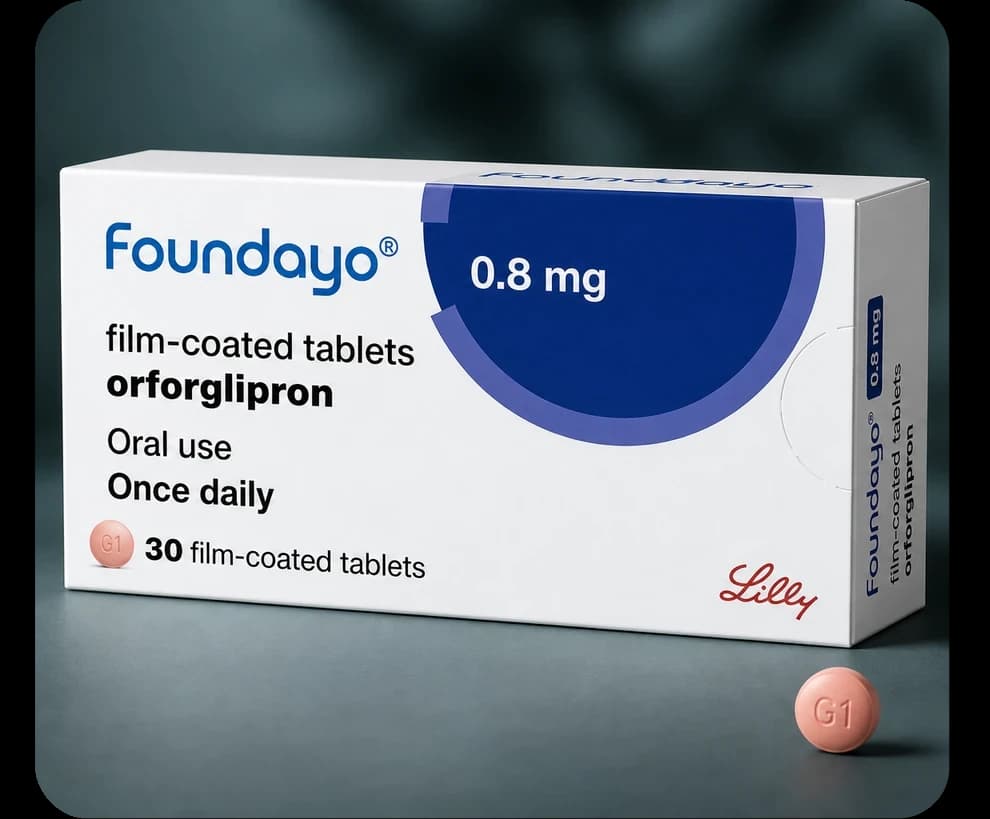
Foundayo (orforglipron)
Foundayo is a small-molecule, non-peptide GLP-1 receptor agonist, so it does not need SNAC. ATTAIN trials reported around 11.1% to 12.4% average weight loss over 72 weeks at the 17.2 mg maintenance dose.
It can be swallowed whole with water at any time of day, with or without food. Titration typically starts at 0.8 mg and steps through 2.5 mg, 5.5 mg, 9 mg, 14.5 mg, and 17.2 mg.
2. Centrally acting appetite regulators (Mysimba)
Mysimba combines bupropion and naltrexone. It acts on hypothalamic and reward pathways and can help people whose main struggle is emotional eating or craving rather than physical hunger alone.
3. Gut-acting lipase inhibitors (Orlistat / Xenical)
Orlistat is taken with fat-containing meals and blocks about 30% of dietary fat absorption. It does not enter the bloodstream, so it can suit patients who cannot use systemic medicines.
Oral weight loss options in 2026
| Feature |
Wegovy pill |
Foundayo |
Mysimba |
Orlistat |
| Class |
Peptide GLP-1 |
Small-molecule GLP-1 |
Bupropion + naltrexone |
Lipase inhibitor |
| How it works |
Slows emptying; increases satiety |
Slows emptying; increases satiety |
Hunger and reward pathways |
Blocks ~30% of dietary fat |
| Average trial loss |
Up to 16.6% (64 weeks) |
Up to 12.4% (72 weeks) |
~5% to 8% (16–24 weeks) |
~5% (12–24 weeks) |
| How it is taken |
Daily, empty stomach; 30-min wait |
Daily, any time, with or without food |
Up to two tablets twice daily |
Up to 3 times daily with fatty meals |
| Storage |
Room temperature |
Room temperature |
Room temperature |
Room temperature |
| Common side effects |
Nausea, reflux, constipation, diarrhoea |
Nausea, indigestion, constipation, diarrhoea |
Nausea, insomnia, dry mouth, headache |
Oily stools, urgency, wind |
Why medication alone does not maintain weight loss
Powerful tablets make a start easier. They do not switch off the biology that drives regain once treatment stops.
Metabolic slowdown and muscle loss
Lower calorie intake reduces resting energy burn. Without enough protein and resistance training, a large share of lost weight can come from lean muscle, which then makes maintenance harder on fewer calories.
Hunger returns when the drug leaves your system
GLP-1 medicines work while they occupy receptors. Stop suddenly and gastric emptying speeds up, ghrelin rises, and food noise often comes back quickly.
Environment and habits still matter
Stress, sleep, alcohol, and comfort eating are not solved by a tablet. Medication creates a buffer while you build routines you can keep. See also our guide to why weight can return after treatment.
Clinician-led habit support
In a regulated clinic, care usually has three phases: active reduction, consolidation, then long-term maintenance.
- Side-effect management: Nausea and bowel changes are common early in Wegovy pill and Foundayo titration. Prescribers can slow the dose steps and advise on meal pacing and hydration.
- Protecting muscle: Reviews focus on protein and accessible strength work so lost weight is mostly fat.
- Planned taper: Doses are stepped down rather than stopped overnight, so appetite circuits adapt more slowly.
You can also compare formats in our oral vs injectable 2026 guide, or read how to switch from Mounjaro to Foundayo or move from injections to the Wegovy pill.
What to look for in a UK service
- CQC registration: Independent clinics in England should be regulated by the Care Quality Commission.
- GPhC pharmacy: Genuine tablets should be dispensed from a GPhC-registered premises.
- Direct clinical access: You should be able to reach UK-registered prescribers for reviews, blood pressure checks, and side-effect advice.
- A maintenance pathway: Look for tapering and lifestyle support, not only repeat supply. PrivateDoc's maintenance plans are built for that stage.
Sustainable weight management with PrivateDoc
PrivateDoc combines MHRA-approved oral options with ongoing clinical review: a thorough online consultation, access to Foundayo, the Wegovy pill, Mysimba and Orlistat where appropriate, structured check-ins, and tracked delivery from our UK dispensary.
Explore oral and injectable treatments, or start a confidential consultation to see which option fits your history and routine.
Disclaimer: This article is for general information only and does not replace personalised medical advice. Treatment is only authorised after a successful clinical assessment.