Key takeaways: struggling to lose weight and home blood tests
- Plateaus are often biological: hypothyroidism, insulin resistance, low iron, and lipid risk can stall progress even when habits are consistent.
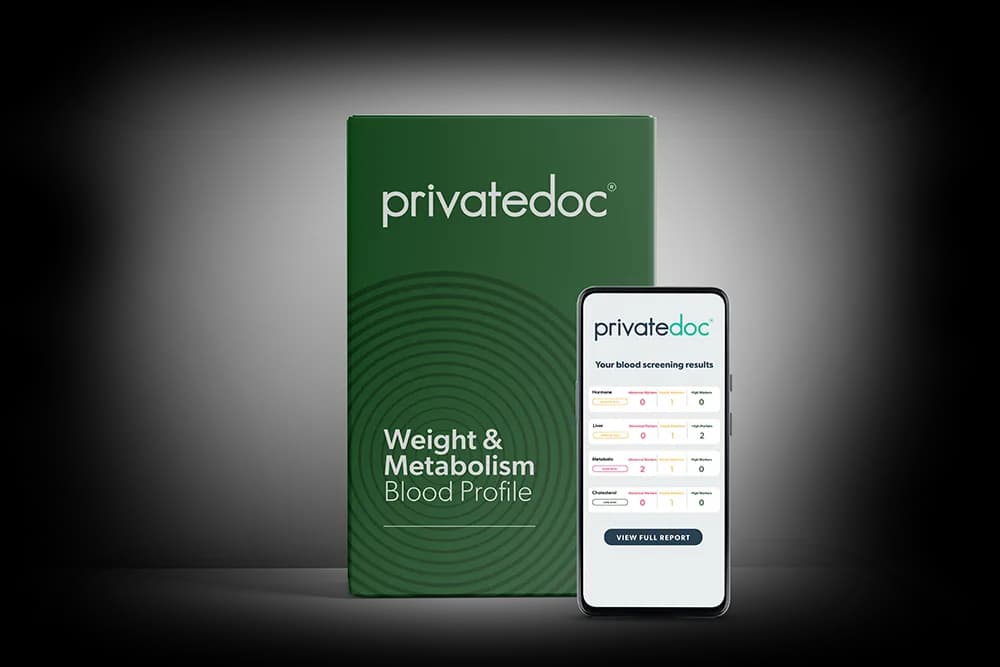
- One targeted panel: the Weight and Metabolism profile checks TSH, Free Thyroxine, HbA1c, ferritin, liver function, and cholesterol.
- Raw numbers are not a plan: a GMC-registered clinician reviews the report in your PrivateDoc account.
- Results can open a treatment path: that might mean lifestyle changes, a further test, GP follow-up, or a conversation about Wegovy or Mounjaro.
- Start with questions, not a shop grid: a short questionnaire matches the kit. Read why clinician reviews matter.
Can a home blood test find out why I am struggling to lose weight?
Yes. A Weight and Metabolism blood profile can identify underlying issues making weight loss difficult. The PrivateDoc test checks markers such as thyroid function, blood sugar (HbA1c), and lipid profiles. A clinician reviews these results to help guide safe and effective medical weight-loss care.
A kit does not replace a full consultation, and it does not guarantee a prescription. It gives your clinician a clearer picture before you start or change treatment. If you already know you want medically supervised weight loss, you can also read the weight-loss guide and check eligibility.
Which home blood test checks thyroid function and metabolism?
The PrivateDoc Weight and Metabolism blood profile specifically checks your thyroid function and metabolic markers. It measures Thyroid Stimulating Hormone (TSH) and Free Thyroxine alongside iron, liver function, and cholesterol. This panel helps clinicians identify metabolic slowdowns that may prevent weight loss.
If tiredness is the main symptom rather than weight, a thyroid function check or a broader core health check may be a better match. The questionnaire is there to route you.
The biology of weight plateaus
Weight management is heavily influenced by hormones and metabolic rate. If you have an underactive thyroid (hypothyroidism) or insulin resistance, your body may store fat more aggressively and burn calories more slowly than average. Without visibility into these internal markers, you can be fighting an uphill battle.
Key biomarkers explained
When you take a targeted blood test, you are looking for specific indicators of metabolic health:
- Thyroid function (TSH and Free Thyroxine): shows whether the thyroid is sluggish.
- HbA1c: measures longer-term blood sugar control to assess insulin resistance.
- Lipid profile: assesses cholesterol levels to evaluate cardiovascular risk.
- Iron (ferritin): low iron causes severe fatigue, which can be mistaken for a slow metabolism.
The testing process
Taking a blood test at home is straightforward. PrivateDoc matches you to the right kit based on your symptoms through a secure online questionnaire. We then dispatch the kit to your door. You collect a small finger-prick sample following the instructions and return it in a prepaid envelope to a UK-accredited laboratory.
From results to treatment
Raw data is not enough. Once the laboratory processes your sample, a GMC-registered PrivateDoc clinician reviews the report. If your markers indicate a metabolic barrier, our doctors can recommend an appropriate pathway. This might include lifestyle adjustments or suitable prescription medicines such as Wegovy or Mounjaro, after a full clinical assessment.
PrivateDoc is a CQC-regulated clinic. You can check registration on the CQC website and read our regulations page.
Find the right test from a few questions
Ready to understand your metabolism? Take our short questionnaire to find the right blood test for your symptoms.
Disclaimer: This article is for general information only and does not replace personalised medical advice. Always speak to a qualified clinician before starting or changing treatment. An at-home blood test does not replace your GP or emergency care.