Key takeaways: Lp(a) and advanced cardiac profiling
- Lp(a) is mostly genetic: 80% to 90% of circulating levels are set by the LPA gene. Diet and exercise barely move it.
- NHS lipid checks omit it: they measure total cholesterol, HDL, LDL, and triglycerides, which mainly reflect lifestyle.
- Once in a lifetime: HEART UK and the European Atherosclerosis Society recommend that all adults test Lp(a) at least once.
- Normal cholesterol is not a full all-clear: elevated Lp(a) or hs-CRP can still mean high cardiac risk.
- Management is still useful: you cannot diet Lp(a) down, but you can lower LDL, blood pressure, glucose, and inflammation.
What is Lipoprotein(a) and why is it not checked in standard cholesterol tests?
Lipoprotein(a), or Lp(a), is a genetically inherited variant of low-density lipoprotein (LDL) that significantly increases the risk of heart disease, stroke, and aortic valve calcification. Standard NHS cholesterol checks omit Lp(a) because routine tests only measure general lipids (total cholesterol, HDL, LDL, and triglycerides), which reflect diet and lifestyle rather than inherited particle count.
- Inherited risk: circulating Lp(a) levels are 80% to 90% determined by the LPA gene. Healthy diet and regular cardiovascular exercise have minimal effect on lowering it.
- Dual danger: Lp(a) is both atherogenic (it enters and oxidises inside arterial walls to form plaque) and thrombotic (it inhibits clot breakdown because of its structural resemblance to plasminogen).
- Testing guidelines: major cardiovascular bodies, including HEART UK and the European Atherosclerosis Society, recommend that all adults test their Lp(a) levels at least once in their lifetime.
Can you have normal cholesterol and still have high cardiac risk?
Yes. You can have completely normal standard cholesterol levels and still be at high risk for cardiovascular disease if you have elevated Lipoprotein(a) or chronic vascular inflammation, measured by high-sensitivity C-reactive protein (hs-CRP). Plaque rupture and arterial blockages are heavily driven by inflammation and specific atherogenic particles that basic lipid panels overlook.
Standard cholesterol panels vs advanced cardiac risk profiling
| Marker tested |
Standard NHS lipid check |
Advanced cardiac profile (PrivateDoc) |
| Total cholesterol and HDL |
Included |
Included |
| LDL cholesterol |
Included (calculated estimate) |
Included (measured directly) |
| Lipoprotein(a) |
Excluded |
Included (detects inherited risk) |
| hs-CRP (inflammation) |
Excluded |
Included (measures low-grade vascular inflammation) |
| Testing requirement |
Repeated every 3 to 5 years |
Lp(a) typically checked once in a lifetime |
What can you do if your Lipoprotein(a) is high?
If Lipoprotein(a) is elevated, clinical management focuses on aggressive reduction of all modifiable cardiovascular risk factors. Because diet alone cannot lower Lp(a), clinicians work to lower overall LDL cholesterol using statins or PCSK9 inhibitors where appropriate, tightly regulate blood pressure, and reduce vascular inflammation.
- Stricter LDL targets: lowering background LDL reduces cumulative plaque burden inside the coronary arteries.
- Blood pressure control: keeping blood pressure strictly below 120/80 mmHg protects the arterial endothelium from mechanical stress where Lp(a) deposits.
- Secondary prevention: stopping smoking, optimising metabolic blood glucose (HbA1c), and managing weight reduce overall cardiovascular vulnerability.
A home kit does not start a statin. Share the reviewed report with your NHS GP or a PrivateDoc prescriber. Treatment is only authorised after a successful clinical assessment.
How can I test my Lipoprotein(a) and heart risk at home with PrivateDoc?
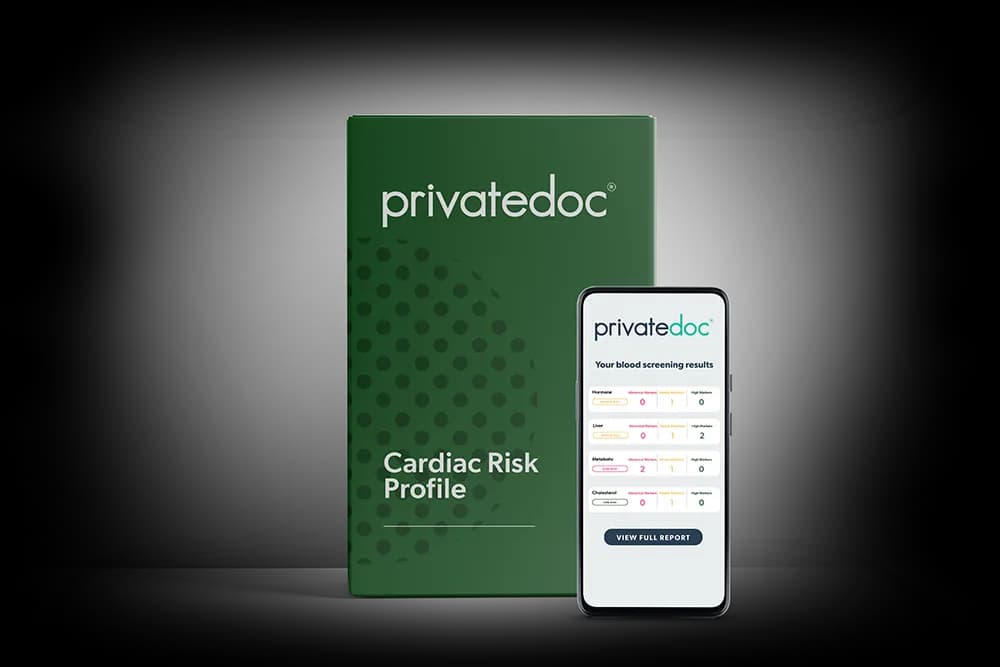
You can test Lipoprotein(a) at home using the PrivateDoc Cardiac Risk Profile. The kit uses a capillary finger-prick collection to measure total cholesterol, HDL, LDL, triglycerides, hs-CRP, and Lp(a), with every result reviewed by a UK GMC-registered doctor.
- Home sample collection: order your kit online; it arrives in discreet packaging with full instructions.
- Laboratory analysis: post your sample to our UK-accredited pathology laboratory using the prepaid return mailer.
- Doctor-led report: a PrivateDoc clinician reviews your inflammatory and genetic markers against your medical history. Read why clinician reviews matter.
- Actionable clinical summary: you receive a medical report outlining your cardiovascular baseline, which you can use with PrivateDoc prescribers or share with your NHS GP.
Find the right test from a few questions
If heart health or family history is why you want a test, start the questionnaire. We match the cardiac profile when it is the right kit.
Disclaimer: This article is for general information only and does not replace personalised medical advice. Always speak to a qualified clinician before starting or changing treatment. An at-home blood test does not replace your GP or emergency care.