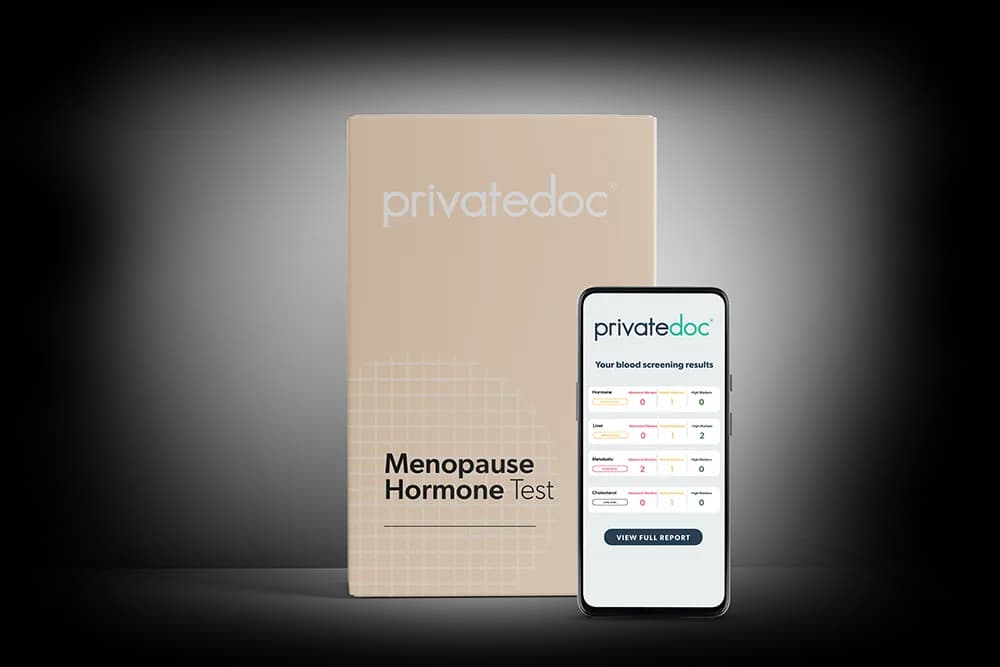
Key takeaways: menopause blood tests and HRT
- Over 45, symptoms often come first: NICE says typical menopausal symptoms at this age can be enough to diagnose menopause without routine blood tests.
- Tests help in selected cases: earlier symptoms, perimenopause uncertainty, or HRT that is not settling symptoms are common reasons to add a panel.
- The PrivateDoc menopause panel typically looks at FSH, LH, SHBG, testosterone, and oestradiol. A clinician reviews the report with your questionnaire.
- Home collection is the sample step: we post a discreet kit. You collect a finger-prick sample and return it in the prepaid pack.
- HRT is a separate clinical decision: a blood test can inform care. A prescription is only issued if a clinician decides it is appropriate.
How accurate are home blood tests for menopause and HRT?
Home finger-prick tests can give clinically useful results when you follow the collection instructions. Timing, under-filling the tube, or not posting the sample promptly can affect quality, which is why the kit includes step-by-step guidance.
PrivateDoc uses a UK laboratory to process the sample. A UK-registered clinician then reviews the same markers they would use in clinic, alongside the symptoms you reported, before advising on HRT or other next steps.
Accuracy is not the same as a complete diagnosis. Hormone levels also move through a cycle and through perimenopause. That is another reason a clinician reads the report rather than leaving you with isolated numbers.
What does a menopause hormone home blood test check?
A menopause hormone test gives clinical numbers that can help explain symptoms. The PrivateDoc menopause panel typically checks follicle-stimulating hormone (FSH), luteinising hormone (LH), sex hormone-binding globulin (SHBG), testosterone, and oestradiol.
The clinician reviews that report with your history. The aim is targeted advice, which may include HRT where it is appropriate, not a one-size reading of a single hormone.
Symptoms versus diagnostics
According to NICE NG23, menopause can often be diagnosed from symptoms and age alone if you are over 45. Blood tests are not a routine hurdle before every HRT conversation in that group.
A diagnostic panel is more useful if symptoms start younger, you are navigating perimenopause with mixed or unclear signs, or you are already using HRT and still feel unwell. In those situations, extra data can help a clinician adjust care.
What the panel measures
A female hormone panel looks at more than one marker so the clinician can see a fuller picture:
- Oestradiol (E2): the main form of oestrogen measured here. Levels fluctuate and tend to fall through the menopause transition.
- FSH and LH: these typically rise as the ovaries become harder to stimulate.
- Testosterone: can be relevant to energy, mood, and libido. The result is interpreted with SHBG, not in isolation.
- SHBG: binds sex hormones in the blood and helps the clinician interpret testosterone and oestradiol results.
Typical contents can vary. The kit page lists what this test typically includes after the questionnaire match.
Taking the test at home
You do not need a clinic visit or a waiting room for this sample. PrivateDoc posts a discreet kit. You collect a finger-prick sample and send it back to the UK laboratory in the prepaid envelope.
This is not a named-kit checkout on the hub. Answer a few questions. If a menopause hormone test is the right match, we send it. Read more about why a clinician reviews the report rather than sending a raw PDF.
Next steps for HRT
A PrivateDoc clinician reviews every laboratory report. If your symptoms and results support HRT, prescribing clinicians can assess you for an online HRT consultation. Blood results inform that decision. They do not replace it.
If HRT is not appropriate, you are told why. You are not charged for a prescription that is not issued. This does not replace your GP, especially if bleeding is unexpected or symptoms are severe.
Match a hormone test from a few questions
If you want clarity on menopause or perimenopause symptoms, start with the questionnaire. We match the kit. A clinician reviews the report in your PrivateDoc account.
Disclaimer: This article is for general information only and does not replace personalised medical advice. Always speak to a qualified clinician before starting or changing treatment. An at-home blood test does not replace your GP or emergency care.