Key takeaways: testosterone, SHBG, and libido
- Free testosterone is the active fraction: typically 1% to 2% of circulating hormone. The rest is bound, mainly to SHBG and albumin.
- High SHBG can hide deficiency: total testosterone may sit in range while free testosterone is depleted.
- Test at 8:00am to 10:00am, fasting: afternoon draws can read 30% to 40% lower because of the diurnal rhythm.
- Prolactin matters: a high result can suppress natural testosterone and contribute to erectile dysfunction.
- A kit is not a TRT prescription: the report explains whether symptoms look like low bioavailable testosterone, high SHBG, or lifestyle factors.
What is the difference between total testosterone and free testosterone?
Total testosterone measures the entire concentration of testosterone in your bloodstream, whereas free testosterone represents the small, unbound fraction (typically 1% to 2%) that is biologically active and available to enter cells. The remaining testosterone is bound tightly to proteins, primarily sex hormone-binding globulin (SHBG) and albumin.
- Bound testosterone: hormone attached to SHBG cannot interact with androgen receptors in muscle, bone, or brain tissue.
- Free (bioavailable) testosterone: the accessible hormone responsible for driving energy, muscle protein synthesis, bone density, and sexual desire.
- The clinical pitfall: a man can have a “normal” total testosterone reading, but if his SHBG is elevated, his free testosterone will be depleted, causing clear symptoms of testosterone deficiency (hypogonadism).
What are the main symptoms of low testosterone in men over 30?
The primary symptoms of low testosterone include chronic fatigue, unexplained loss of lean muscle mass, increased abdominal body fat, low mood or irritability, brain fog, and a noticeable drop in libido or erectile quality. While testosterone naturally drops by roughly 1% per year after age 30, severe symptoms suggest clinical deficiency rather than normal ageing.
Male hormone biomarkers and their clinical role
| Biomarker |
Normal clinical role |
Symptoms when imbalanced |
| Total testosterone |
Overall circulating testicular androgen |
Low: fatigue, reduced drive, muscle loss |
| SHBG |
Regulates hormone bioavailability |
High: binds up active testosterone, creating functional deficiency |
| Calculated free testosterone |
Active, tissue-usable hormone |
Low: poor physical recovery, low libido, brain fog |
| Prolactin |
Pituitary hormone |
High: suppresses natural testosterone synthesis and can cause ED |
When is the best time of day to take a testosterone blood test?
A testosterone blood test must be collected first thing in the morning, ideally between 8:00am and 10:00am, while fasting. Testosterone levels follow a strict diurnal rhythm, peaking early in the morning and declining by up to 30% to 40% by late afternoon.
- Accuracy standards: blood draws taken in the afternoon often produce false-low results that do not reflect true peak physiological production.
- Fasting requirement: eating a high-carbohydrate meal immediately before testing can temporarily suppress serum testosterone concentrations.
How do I test my testosterone discreetly with PrivateDoc?
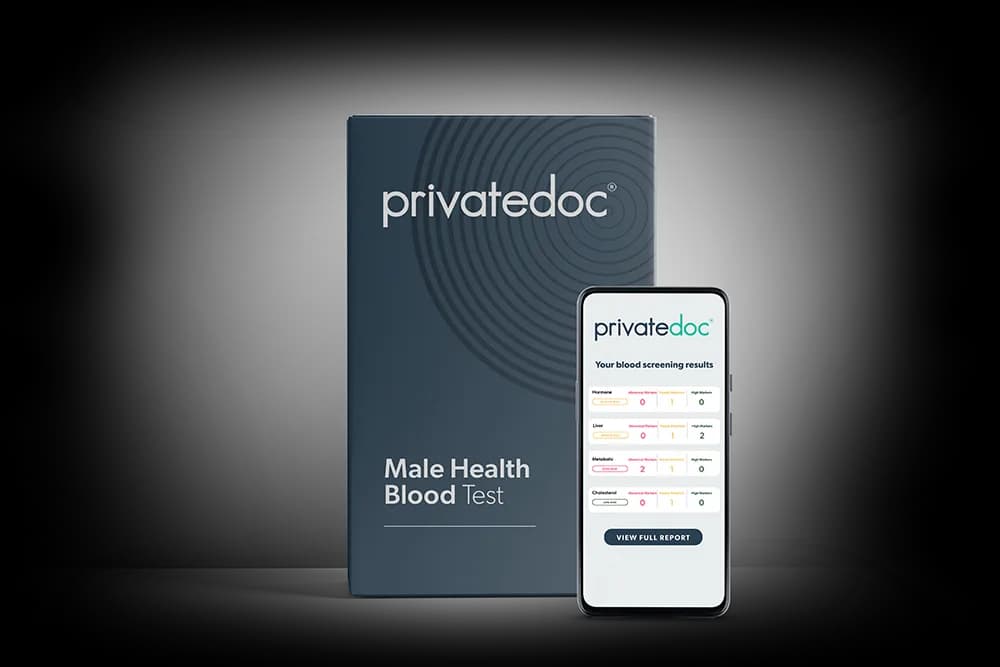
The PrivateDoc Male Health Blood Test allows you to collect a small morning finger-prick sample at home to measure total testosterone, calculated free testosterone, SHBG, and prolactin. All samples are processed by UK-accredited laboratories and assessed by GMC-registered doctors.
- At-home morning collection: collect your sample between 8:00am and 10:00am using the sterile kit and return it via prepaid tracked mail.
- Pathology analysis: our accredited partner lab measures your full hormonal cascade.
- Medical prescriber review: a PrivateDoc doctor or Advanced Nurse Prescriber reviews your values against your reported symptoms. See why clinician reviews matter.
- Targeted guidance: your confidential online report explains whether symptoms stem from low bioavailable testosterone, high SHBG, or lifestyle factors.
A blood test does not start testosterone replacement. If treatment is discussed later, it is only authorised after a successful clinical assessment.
Find the right test from a few questions
If libido, energy, or muscle change is why you want a test, start the questionnaire. We match the male health panel when it is the right kit.
Disclaimer: This article is for general information only and does not replace personalised medical advice. Always speak to a qualified clinician before starting or changing treatment. An at-home blood test does not replace your GP or emergency care.